.avif)
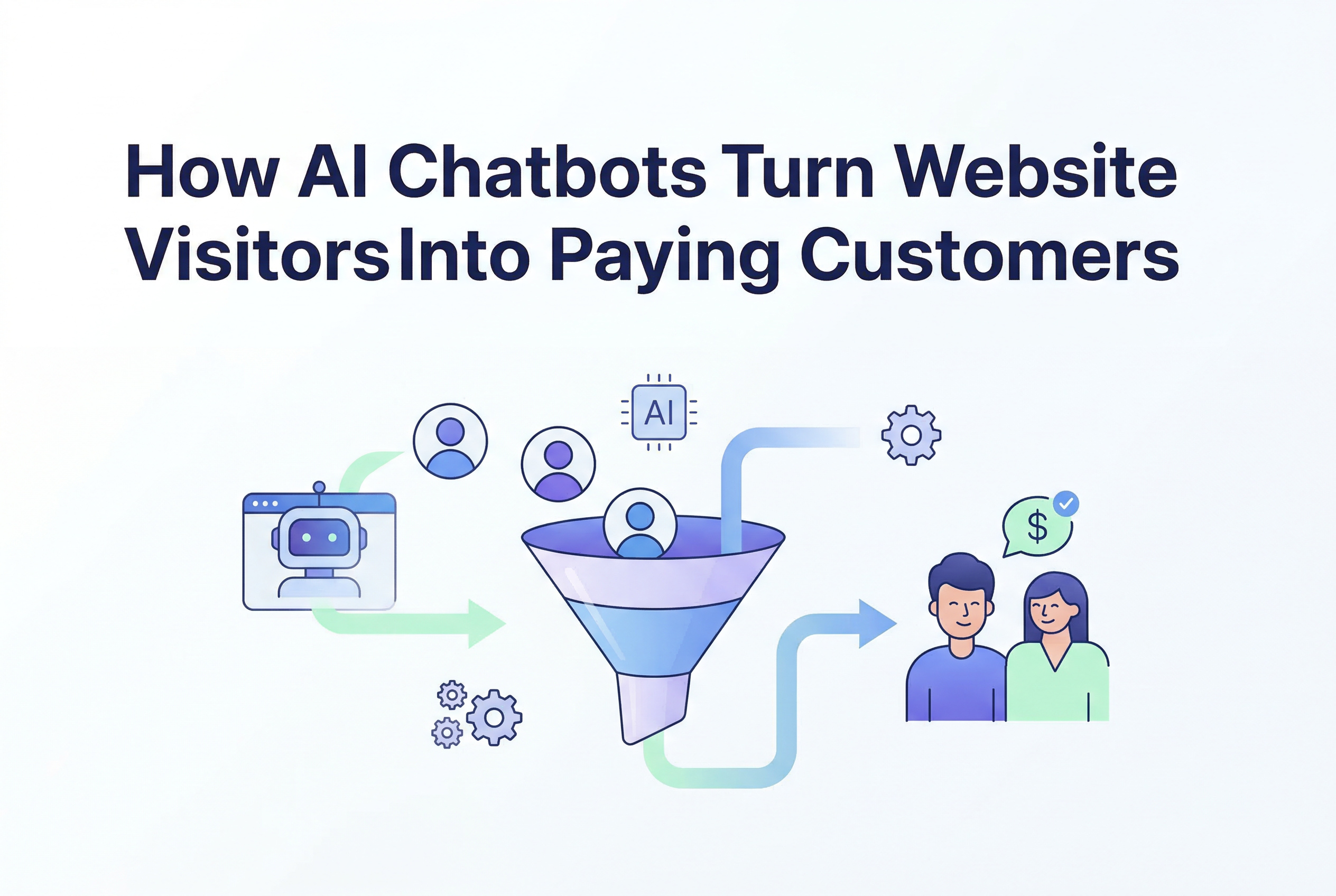
How AI Chatbots Turn Website Visitors Into Paying Customers
Why Most Websites Lose Visitors Before They Ever Make Contact
Picture this. Someone finds your website at 9pm on a Tuesday. They read through your services page, they like what they see, and they have one question before they decide to reach out. But there is no one available. The contact form feels like a dead end. So they close the tab and move on. That visitor is gone, and you never knew they were there.
This is the most common way small businesses lose business online, and most owners have no idea how often it happens. The website looks fine. The services are good. The pricing is fair. But the gap between a visitor having interest and a visitor becoming a lead is never bridged, because no one is there to bridge it.
AI chatbots solve exactly this problem. Not by replacing your team, but by being the presence on your website that your team cannot be around the clock. When someone visits at 9pm, the chatbot is there. When someone visits during a busy week when your team is stretched, the chatbot handles the first conversation. When someone is not quite ready to book but wants to understand more, the chatbot gives them what they need to take the next step.
What a Properly Built AI Chatbot Actually Does
There is a version of chatbots that frustrates everyone. The kind that loops through irrelevant menus, refuses to answer anything outside a narrow script, and makes the visitor feel more stuck than before they arrived. That experience is not what a well-built AI chatbot delivers, and it is not what your website visitors will encounter when the tool is built properly.
A properly built AI chatbot for a small business does the following:
- Answers common questions about your services, pricing, and process in real time
- Guides visitors toward booking a call, filling out a form, or getting the specific information they need
- Qualifies leads by asking the right questions before capturing contact details
- Handles conversations outside business hours without dropping the quality of the interaction
- Routes qualified leads to your inbox or CRM with context already attached
- Escalates to a human immediately when the conversation calls for it
The difference between this and a scripted bot is the intelligence behind the conversation. AI understands natural language. A visitor can phrase something in five different ways and the chatbot understands the intent behind all five. That is what makes it feel like talking to a knowledgeable team member rather than navigating a help menu.
The Numbers That Make This Impossible to Ignore
Over half of all website visits happen outside typical business hours. If your website cannot respond during those hours, you are invisible to more than half the people who visit you. Businesses that respond to an enquiry within five minutes are significantly more likely to qualify that lead than businesses that respond hours later. Speed is not just a courtesy, it is a conversion factor.
The businesses that add a well-built AI chatbot to their website consistently see three things happen. First, more visitors make contact because there is something to engage with rather than a silent form. Second, the leads that come in are better qualified because the chatbot has already gathered context. Third, the team spends less time on repetitive first-response tasks and more time on the conversations that actually require human judgment.
What Makes a Chatbot Feel Right on Your Website
The tone, the language, and the conversation flow all need to reflect how your business actually communicates. A chatbot built on generic templates will feel generic. One built around the specific questions your visitors ask, in language that matches your brand, will feel like a natural extension of your team.
The design of the conversation matters as much as the technology. A visitor should never reach a dead end. Every flow should lead somewhere useful, whether that is an answer, an invitation to book, or a handoff to a human. When this is done well, visitors do not notice the chatbot as a tool. They notice that your business was immediately helpful when they had a question.
How WebRedo Builds Chatbots That Actually Convert
At WebRedo, AI chatbots are built from the ground up around how your specific business works and how your customers actually think. The conversation flows are designed with conversion in mind, the language is tailored to your brand, and the integrations connect directly to the tools you already use. If you are ready to stop losing visitors who never make contact, explore the AI chatbot solutions WebRedo offers and see what a properly built assistant looks like on a real business website. You can also try a live demo before committing to anything.
Frequently Asked Questions
Does an AI chatbot replace my team?
No. It handles the first layer of interaction so your team can focus on conversations that genuinely need human input. Think of it as covering the gap your team cannot be present for rather than replacing the people in it.
How long does it take to set up?
Most chatbots built by WebRedo are live within three to five business days. The setup process involves defining conversation flows, training the assistant on your business, and connecting it to your existing tools. After launch, minimal ongoing management is required.
Will visitors find it intrusive?
When designed correctly, no. A chatbot that appears at the right moment with a relevant opening message feels helpful rather than interruptive. Visitors who are not interested simply ignore it. Visitors who have questions get an immediate, useful response.
What happens to the leads the chatbot captures?
They are routed directly to your inbox, CRM, or calendar with context already attached. You receive a qualified lead rather than a blank form submission, which makes follow-up faster and more effective.
.avif)
© Copyright WebRedo 2026. All Rights Reserved
.avif)